
For a desktop CNC, choose between HSS and carbide end mills by the cutting conditions—not by treating carbide as an automatic upgrade. High-speed steel generally offers greater toughness, while solid carbide generally offers stronger wear and heat resistance but greater sensitivity to brittle chipping. The useful choice is the exact tool whose geometry, operating range and material guidance fit your job.
That distinction matters when deciding whether to buy a carbide end mill set. A tool that gradually loses its edge presents a different problem from one that chips soon after entering the cut. Replacing either with a more expensive material, without understanding the difference, can leave the original problem untouched.
Separate the cutting material from the cutter's shape
HSS describes a family of high-speed steels used to make cutting tools. Solid carbide describes another tool-material family. Neither term tells you whether the cutter has a square end, a rounded tip, an upcut spiral or the cutting edges required for a particular entry move. Those are separate geometry decisions.
Nor is carbide one identical material across every manufacturer and product. Sandvik Coromant explains that cemented carbide combines tungsten-carbide particles with a metallic binder; grain size and binder composition help determine the balance of hardness and toughness. The practical lesson is to compare documented tools, not assume that two cutters carrying the same broad material label perform alike.
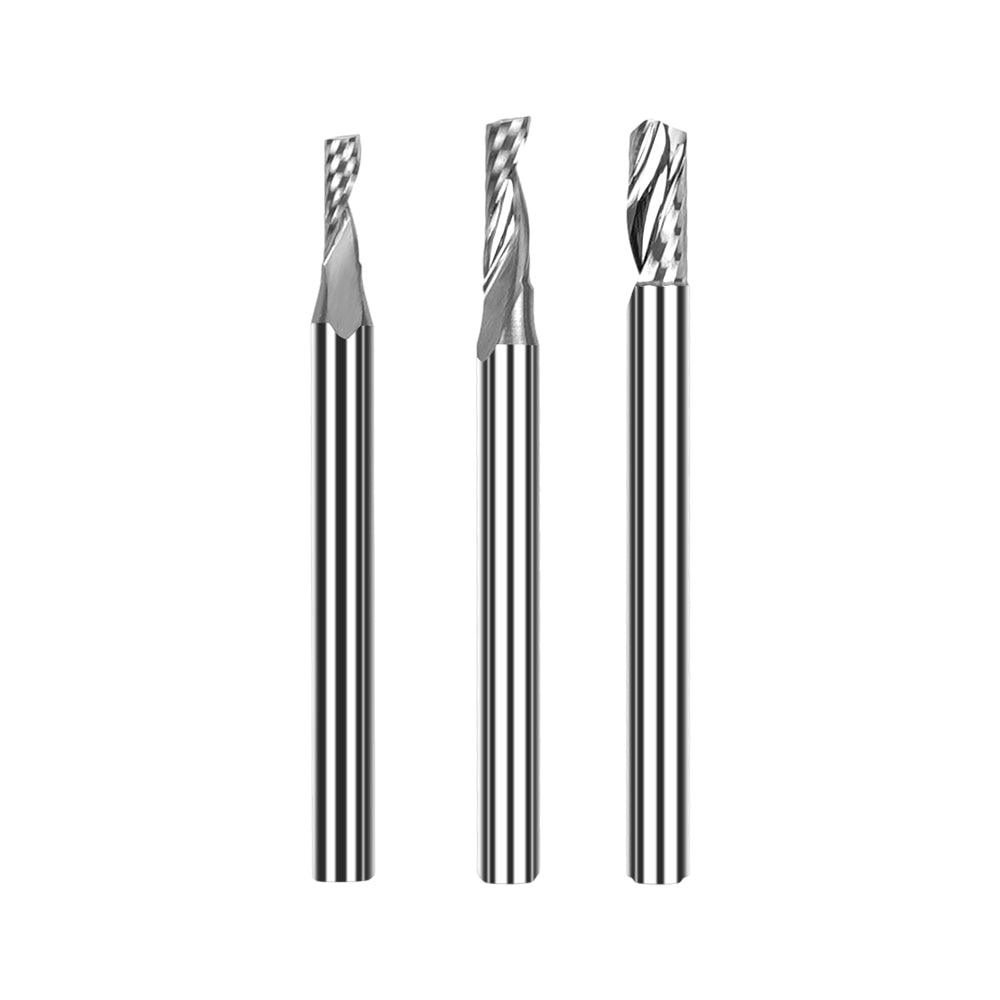
For example, the TwoTrees three-piece carbide end-mill set is a concrete carbide-labeled option to examine. Its material label is one part of the choice. The required shape, cutting dimensions, shank fit and intended application still have to match the operation.
Make the comparison like for like. If one candidate is a drill and the other an end mill, you are changing the operation as well as the substrate. If one end mill has a different diameter, reach or flute form, a difference in results cannot be attributed to HSS versus carbide alone.
A coating is not the material underneath it
Coatings and substrates answer different questions. The substrate forms the tool body; a coating modifies its surface. Sandvik's discussion of coated carbide treats the coating and underlying carbide as distinct parts of an application-specific grade. A surface treatment does not turn steel into carbide.
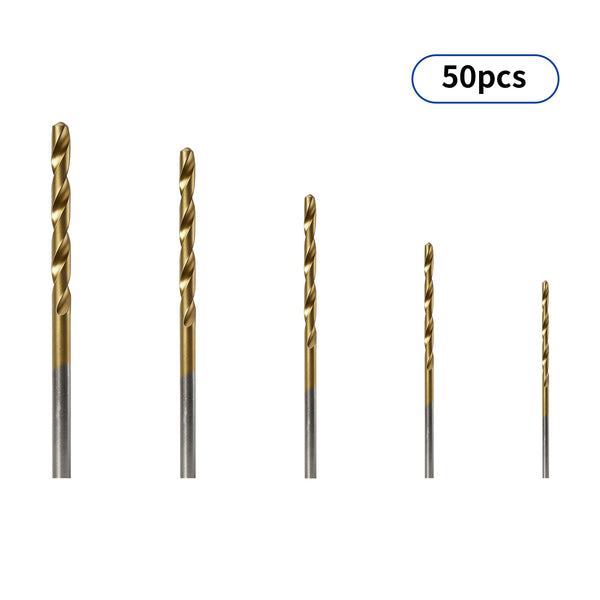
The TwoTrees TiN-coated HSS twist drills illustrate that distinction: their listing identifies an HSS base material with a titanium-nitride coating. They are drills, not end mills for lateral milling. Their gold-toned appearance is not a reason to classify them as solid carbide or substitute them for a profiling cutter.
Match the operating range before comparing the upgrade
The word “high-speed” in HSS is not permission to run an unknown tool at any speed a router offers. Conversely, HSS is not categorically excluded from routing: Amana Tool publishes operating guidance for specific HSS single- and double-flute aluminum-cutting router bits. Those documented products show why a blanket ban is unhelpful, but their settings belong to those exact tools and conditions.
The manufacturer's data must have a usable match with your machine. If the documented operation needs a spindle speed outside the machine's permitted range, the tool is not qualified for that setup merely because its shank fits. Slowing the feed arbitrarily is not a substitute for establishing a suitable operating range.
OSG's standard HSS-Co end-mill data also separates recommendations by workpiece material and cutter diameter. This is why an industrial tool chart should not become a generic desktop-CNC recipe. Keep the cutter, workpiece, engagement and machine limits together; changing the substrate is not an instruction to copy another tool's cutting data.
Is the job wearing the edge—or damaging it?
Wear resistance and toughness are not the same property. Wear resistance concerns gradual edge deterioration; toughness concerns resistance to fracture. Harvey Performance's substrate comparison explains why carbide can be attractive for wear and heat resistance, yet more susceptible to brittle failure under vibration, interrupted cuts or shock. HSS's greater toughness can be relevant when evaluating an otherwise suitable tool for less forgiving engagement.
That does not make HSS a repair for loose stock, excessive reach or an unstable machine. If a cut chatters or an edge chips, stop and examine the setup and tool condition before continuing. An observation raises a question; it does not identify one cause from a distance. Selecting a tougher substrate and repeating an unsafe setup is not a valid solution.
For a wear-limited operation, the useful question is whether a documented carbide alternative provides a property the job can actually use. For a fracture-limited operation, first establish why the edge is being damaged. The answer may concern tool selection, but it may instead require a different engagement, better support or a correction to the setup.
Apply the choice to a repeated wood project
Consider a hypothetical run of small wooden desk organizers. You have already chosen a cutter geometry for their profiles, and you are comparing HSS and carbide options documented for that wood and operation. Assume the stock is securely held and the machine can operate within the guidance for either candidate. These assumptions define the comparison; they are not claims about a particular shop or TwoTrees test.
If the process is stable but gradual edge dulling is interrupting repeat work, a suitable carbide cutter is worth evaluating. The reason is the relevant material property, not the number of tools in the box. You would still judge the actual edge and finished parts rather than assume an advertised substrate delivers a particular service life.
Now change one condition: the design introduces intermittent engagement, and a cutter shows chipped edges. The decision is no longer just how to resist wear. Review the changed engagement and setup before selecting a replacement. A rated HSS option might remain a candidate where toughness is valuable, but only after the operation is supported and its operating requirements fit the machine.
When choosing CNC router bits and end mills, including CNC router bits for wood, make that distinction before building a set. Buy the geometries the job needs in a documented substrate and configuration. A larger carbide assortment does not help if it lacks the required cutter, and an HSS label does not qualify an unsuitable tool for your spindle.
Remove damaged cutters from service, and stop and isolate the machine as instructed before inspection or tool changes. Sandvik's carbide-tool safety information warns against using damaged tools and against grinding without appropriate dust controls. Keep guards and suitable protection in place; do not attempt an uncontrolled repair to make a chipped cutter usable again.
For the organizer job, carbide becomes a reasoned choice when its documented properties address gradual wear under supported cutting conditions. HSS remains a legitimate candidate when the exact tool's toughness and operating requirements suit the task. If neither candidate fits the machine or the cut is unstable, resolve that mismatch first—the substrate comparison has not yet reached the point where a purchase solves the problem.


